
What Are Ear Seeds? How They Work and How to Use Them
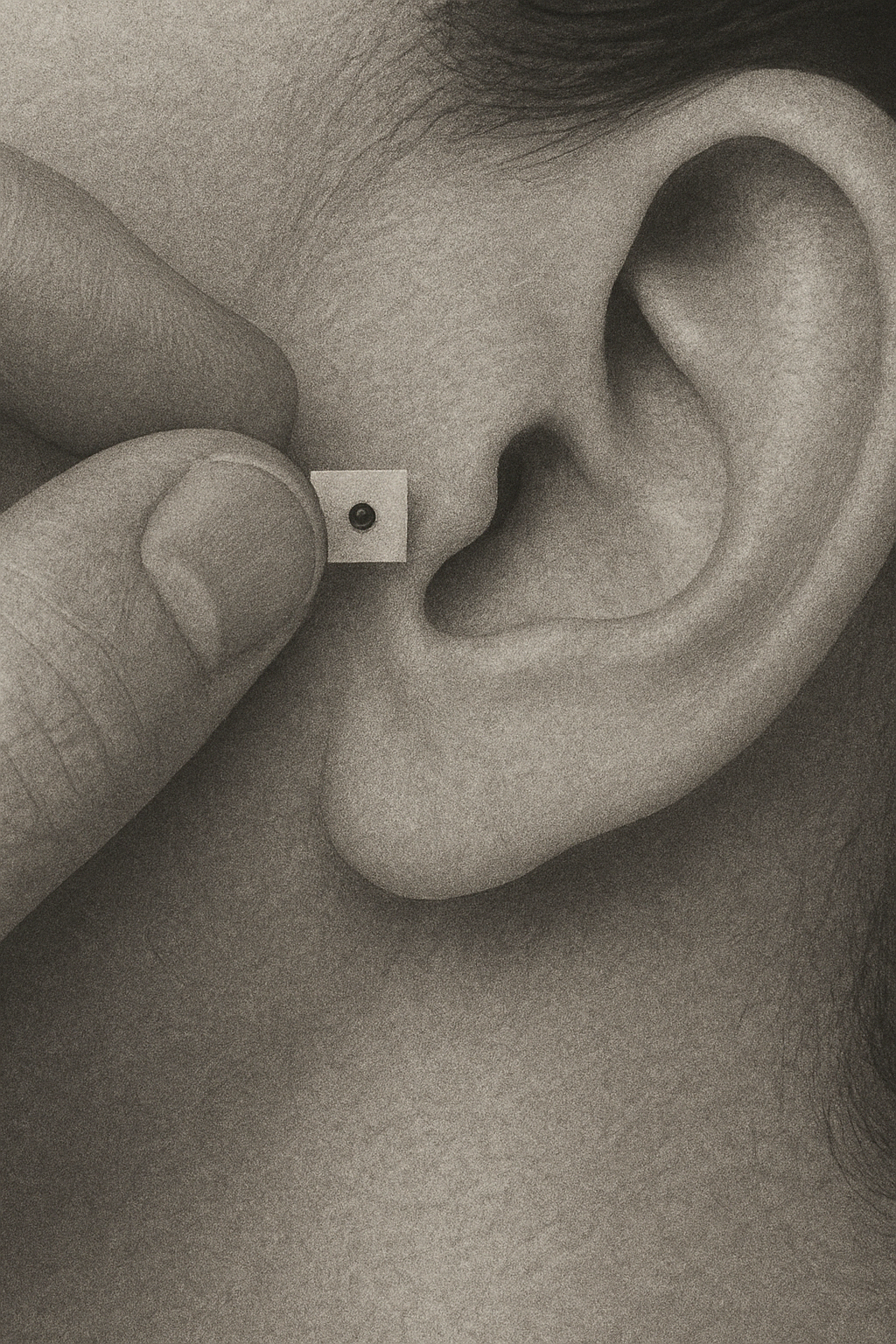
Ear seeds are tiny beads or seeds held in place with a small adhesive patch on specific points of the outer ear. They do not pierce the skin. Instead, you press them gently throughout the day, making them an easy way to carry a little acupressure with you between appointments.
At Mount Sunny, we use ear seeds as a simple extension of the work we do in the clinic: subtle, specific, and chosen for what is actually going on with you.
What are ear seeds?
Traditional ear seeds are often made from vaccaria seeds, though modern kits may use small metal beads. The seed or bead is attached to an adhesive backing and placed on a selected point of the ear.
In Traditional Chinese Medicine, the ear is understood as a microsystem: a small map that reflects the whole body. Auricular therapy uses points across the ear as part of an individualized treatment plan. Ear seeds offer a non-needle version that can be worn at home.
How do ear seeds work?
Ear seeds provide gentle, repeated pressure to a selected auricular point. Pressing the seed is the active part of the practice; the seed itself is there to make the point easy to find again.
Point selection matters. A licensed acupuncturist may choose a different combination for a tense jaw than for a restless week or digestive discomfort. That is why an ear map is useful for general guidance, while a practitioner can make the practice more specific to you.
What are ear seeds used for?
In the traditional framework, practitioners often choose ear points to support patterns related to:
- Everyday stress and feeling overwhelmed
- Rest and sleep routines
- Jaw, neck, and shoulder tension
- Digestive comfort
- Menstrual and hormonal balance
- Cravings and habit support
Ear seeds are best understood as a supportive practice, not a one-size-fits-all prescription or a replacement for medical care.
How to apply ear seeds
- Start with clean, dry skin. Wipe the outer ear and let it dry completely so the adhesive can hold.
- Choose your points. Use the map included with your kit or follow the point plan given by your acupuncturist.
- Apply with tweezers. Place the patch over the point and press the adhesive into place.
- Press briefly. Gently press each seed for a few seconds, a few times through the day. The pressure should feel noticeable, not sharply painful.
- Remove after three to five days. Take the seeds off sooner if the skin becomes sore, itchy, or irritated. Let the skin rest before applying a new set.
For a visual walkthrough, use our step-by-step Ear Seed Guide.
Ear seeds vs. ear acupuncture
Both practices use points on the outer ear, but ear acupuncture uses very small needles and belongs in a licensed practitioner’s treatment room. Ear seeds stay on the surface of the skin, so they are the more approachable option for at-home use and between-session support.
When should you remove them?
Remove ear seeds if the area feels painful, hot, swollen, itchy, or irritated, or if the adhesive becomes dirty or loose. Do not place them over broken or irritated skin. If you are pregnant, have a bleeding disorder, are immunocompromised, or have questions about whether ear seeds are appropriate for you, ask a licensed healthcare professional first.
A small practice you can keep close
Ear seeds are not meant to be dramatic. They are a quiet cue to pause, press, breathe, and check in with your body. Start with our visual guide, and ask your acupuncturist for a more personal point plan if you want to make the practice specific to you.
Source note: Skya Abbate, Chinese Auricular Acupuncture, pp. 1–6 and 99–100. This article is educational and is not medical advice. Ear seeds are not intended to diagnose, treat, cure, or prevent disease.
More Reading
-

Spring in Traditional Chinese Medicine: How to Support Your Liver Qi This Season
There's a reason so many people feel off in early spring — irritable for no clear reason, tight in the shoulders, digesting poorly, emotionally restless even when nothing is particularly wrong. In Traditional Chinese Medicine, that pattern has a name:...
-

How to Use a Gua Sha Tool (The Right Way)
Gua sha has had a moment. And with that moment came a lot of well-meaning tutorials on the internet that skip the part about how it actually works. Here's the version with the technique behind it. What gua sha is...
-

Facial Acupuncture vs. Botox: What's Actually Different
This isn't an anti-Botox post. There's a place for injectables, and we're not here to talk anyone out of something that works for them. But people ask us this question a lot — patients who are curious about facial acupuncture...


